
Part One
Contrary to conventional medicine belief, GERMAN NEW MEDICINE – Dr, med. Ryke Geerd Hamer discovered FIVE BIOLOGICAL LAWS that explain the cause. Dr. Hamer is the first to prove scientifically that cancer, for example, is not – as previously thought – a senseless proliferation of deadly cancer cells but rather part of a Significant Biological Special Program(SBS) of Nature that has been successfully practiced for millions of years of evolution. In his practice, of 6,500 patients with mostly ‘terminal’ cancer, 6000 were still alive after MORE THAN five years – a 92% success rate. (Dr. med. Ryke Geerd Hamer)
According to these biological laws, diseases are not, as assumed, the result of malfunctions or malignancies of the organism but rather “SIGNIFICANT BIOLOGICAL SPECIAL PROGRAMS OF NATURE” (SBS), created to assist an individual during a period of emotional and psychological distress. According to Dr. Hamer…
First Law, “Every SBS originates from a DHS (Dirk Hamer Syndrome), which is an unexpected, highly acute, and isolating conflict shock that occurs simultaneously in the PSYCHE, the BRAIN, and on the corresponding ORGAN.”
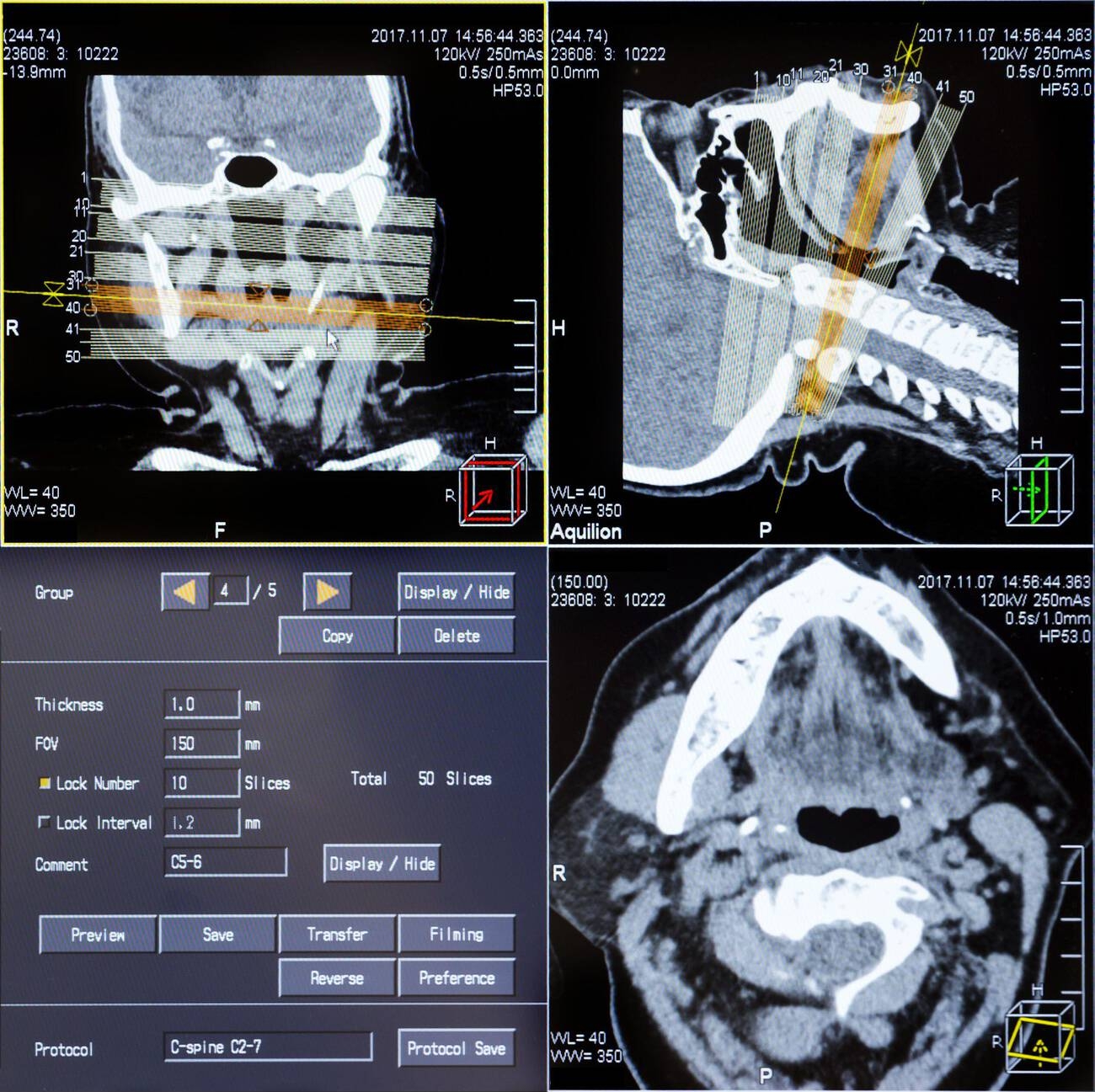
The moment the brain cells receive the DHS, the conflict shock is immediately communicated to the corresponding organ and a SBS, on stand-by for exactly that conflict, and instantly activated. The impact of the shock is visible on a brain scan (brain computer tomogram) as a set of sharp concentric rings called a Hamer Focus or HH.
The Biological significance of each SBS is to improve the function of the conflict-related organ, so that the individual is in a better position to manage and eventually resolve the conflict. Both the biological conflict and the biological significance of each SBS always relate to the function of the correlating organ or organ tissue. The brain control centers of each organ are arranged in the same order as the organs in the body.
The conflict content determines the location of the HH in the brain and where exactly on the organ level the related SBS will run its course.
Second Law: Every SBS-Significant Biological Special Program runs in two phases provided there is a resolution of the conflict.
The first phase is the Conflict Active Phase and the second phase is the Healing Phase. According to Dr. Hamer’s theory, disease will turn into cancer when we hang in the Conflict Active Phase and patient goes in to a hanging conflict because the conflict cannot or has not yet been resolved. If a person is in acute conflict-activity for a longer period of time, the condition can be fatal. We take up the case of breast cancer first, in Part Two below.
The resolution of the conflict is the turning point that initials the second phase of the SBS. The Healing Phase actually starts from the brain, parallel to the healing of the psyche and the related organ, the brain cells that received the impact of the DHS also start to heal.
(Caroline Markolin, PhD)
MORE ABOUT SPECIFIC CAUSES OF FACTORS CONTRIBUTING TO BREAST CANCER — continued in Part Two: “Why Cancer – Part Two: Which Conflict, Which Organ?”
Part Two: Which Conflict, Which Organ?
In our previous article we ended with breast cancer, so let us begin there — because in Hamer’s model, the breast shows his whole way of thinking in miniature. GNM teaches that the breast is really two organs in one. The breast glands belong to an older tissue layer governed, Hamer said, by worry: a woman who suffers what he called a “nest-worry conflict” — a sudden, consuming worry over someone in her “nest,” a child, a partner, a parent — is said to produce more gland cells, as if to give more milk to the one in danger. His literature’s standard example is a mother whose child darts into the street and is struck by a car: while the child hangs in the balance, the mother’s worry keeps the program running, and a glandular tumour is its result. The milk ducts, by contrast, are linked in his model to a separation conflict — the feeling of a loved one being “torn from my breast.” A daughter who emigrates without warning, a partner who leaves: here the ducts are affected, and what medicine calls intraductal cancer is, in GNM’s reading, largely a phenomenon of the healing phase, when the tissue is restored.
What organizes this map, in Hamer’s system, is his Third Biological Law: our tissues descend from three embryonic germ layers, each governed from a different part of the brain, and each answering a different family of conflicts. The oldest layer answers conflicts of sheer survival — can I take in, digest, and eliminate what life requires? The middle layers answer conflicts of protection and of self-worth. The newest layer, the surface tissues governed from the cerebral cortex, answers conflicts of separation, territory, and identity.
Follow that key, and the examples fall into place. A death-fright — in GNM’s literature, very often the moment a person is told a diagnosis is fatal — is said to strike the lung alveoli, which multiply, in Hamer’s words, to take in more oxygen and survive. A starvation conflict, which today is usually the fear of being unable to provide — a business fails, a job is lost — belongs to the liver. An experience one “cannot digest,” an ugly accusation or a bitter fight over an inheritance, is assigned to the colon, stomach, or pancreas, depending on its flavour. The feeling of one’s very existence being swept away — the refugee who has fled with nothing, the patient who feels abandoned in a hospital — is linked to the kidney collecting tubules, which in this model hold back water so the body can survive its exile.
The protective layer has its own logic: feeling attacked, even by wounding words, or feeling soiled and disfigured, is said to thicken the dermis as armour — the program behind what is diagnosed as melanoma. The self-worth layer gives us the bones: a severe blow to a person’s sense of value — “I am useless now” — is said to dissolve bone while the conflict lasts. And here Hamer’s model makes one of its most striking claims: leukemia is not the disease but the healing phase, the bone marrow flooding the blood with young cells as bone and self-worth are rebuilt together. The newest layer completes the picture — loss of skin contact (a separation conflict) behind eczema of the epidermis; a threat looming over one’s home or position (a territorial fear) behind the bronchi; a shock that leaves one speechless (a scare-fright) behind the larynx; and not knowing where one belongs any more (an identity conflict) behind the rectum.
It is worth noticing that Hamer was not the only one reading the body this way. A widely used mind-body reference — a dictionary that pairs physical conditions with the emotional patterns its compiler observed behind them — arrives, by a completely different road, at strikingly similar addresses. For the larynx it speaks of people who feel it is simply not allowed for them to speak their truth, as if a boot were pressing on the throat — beside Hamer’s scare-fright that leaves a person speechless. For melanoma it describes threats that “get under the skin” and an environment trying to penetrate one’s defences — beside Hamer’s attack conflict, where the skin thickens as armour. Its liver entry centres on sustenance: a person who feels he has no right to have life-sustenance, full of resentment and survival anxiety — beside Hamer’s starvation conflict. Its lung entry is about the fear of taking in the breath of life itself — beside Hamer’s death-fright. And for leukemia it speaks of self-attack and collapsed self-worth — the same axis on which Hamer placed the bones and their healing phase. Two systems, built independently, do not agree on mechanism, and neither is proof of the other; but when different maps keep marking the same emotional weather over the same organs, the pattern is at least worth a reader’s attention.
Hamer claimed that, with this map, a practitioner could reason backwards from the organ to the conflict a patient must resolve. Whether one accepts his conclusions or not, the internal logic is consistent, and it is why his followers find the system compelling: in his world, no cancer is random — every tumour is an answer to a question life asked the patient. We present his model here as he taught it, so readers can understand it and judge it for themselves.
A note on honesty (added at David’s direction, Nov 2, 2026): readers should know where this model stands officially. German New Medicine is not accepted by mainstream medicine: no study validating it appears in the medical literature, the cancer societies of Germany and Switzerland reject it, and Dr. Hamer’s medical licence was revoked in 1986. We state this plainly so no one is misled. At the same time, it is fair to observe that approaches which threaten large established business interests are often dismissed rather than debated — a working protocol that costs little is not good business for an industry built on expensive treatment. Whether German New Medicine is true is, in the end, for each reader to weigh and decide.
This information is provided/written by David Chan, CNP, ROHP, and is educational only — it is not intended to replace the medical advice of your doctor. Please consult your doctor for advice about a specific medical condition.